What are the safest cars in the UK?

There isn't one single car you can point to as officially "the safest" in the UK, and anyone who tells you otherwise is oversimplifying it. What there is, is a reliable way to work it out for yourself, and that's what we're here to help with.
Euro NCAP is the independent organisation that crash tests new cars sold across the UK and Europe, and it publishes every result for anyone to look up. Its Best in Class winners are the closest thing to a shortlist of the safest cars on sale, and among the cars it tested in 2025, the highest scorer overall was the Mercedes-Benz CLA.
Here's a quick cheat sheet before we get into the detail:
- Euro NCAP - rates car safety in the UK
- A five star rating from 2016 isn't the same achievement as a five star rating from 2025 (always check the test year)
- From 2026, the whole rating system has changed to four stages of safety
How is car safety measured in the UK?
In the UK and across Europe, Euro NCAP are an independent organisation, which has been testing new cars since 1996.
It exists because its founders believed the legal minimum safety standards didn't reflect real-world driving risks. Its tougher, independent tests are published free by model, and today manufacturers actively design cars to achieve a five-star Euro NCAP rating.
Until the end of 2025, every car was scored across four areas:
- Adult occupant protection
- Child occupant protection
- Vulnerable road users (pedestrians and cyclists)
- Safety assist (the driver aids that help you avoid a crash in the first place)
One thing worth being really clear about, though: Euro NCAP is a consumer programme, not a regulator. It can't stop a car being sold. What it can do is publish the results and let you, the buyer, decide.
What changed in 2026: the four stages of safety
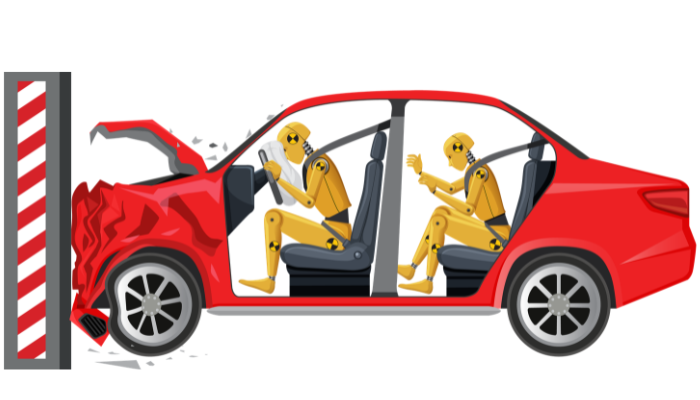
From 2026, Euro NCAP has rebuilt its rating system. The four assessment areas that had been in place since 2009 are gone, replaced by four stages of safety that follow the actual sequence of a crash:
- Safe driving: driver monitoring and the systems that keep you alert and in lane
- Crash avoidance: the tech that stops the crash happening in the first place
- Crash protection: the traditional business of crash test dummies and deformable barriers
- Post-crash safety: getting help to the scene and getting people out safely
Each category is scored as a percentage, with minimum thresholds determining the overall star rating. The tests are updated every three years and now include more real-world scenarios, such as testing speed assistance on public roads and ensuring electric door handles still work after a crash.

Why you can't compare star ratings from different years
A five star rating from 2016 and a five star rating from 2025 are not the same achievement. Euro NCAP tightens its tests every few years, so the bar a car had to clear in 2016 is nowhere near the bar it has to clear now. The stars stay the same. The exam gets harder.
For you as a buyer, that means the test year matters just as much as the star count. Always check when the car was actually assessed, and give an older rating noticeably less weight than a recent one, even if both show five stars. It's also why Euro NCAP only compares cars tested in the same year when it picks its Best in Class winners, comparing across years wouldn't be a fair fight.
The safest cars on sale in the UK right now
So which cars actually come out on top? Every January, Euro NCAP names its Best in Class winners: the highest-scoring models in each category among the cars it tested that year. Only cars with a five star rating and standard safety equipment are eligible. Here are the results for cars tested in 2025, published in January 2026.
- Best performer and best small family car: Mercedes-Benz CLA. It scored 94% for adult occupant protection and 93% for vulnerable road users, helped by an active bonnet and a well-judged autonomous emergency braking system.
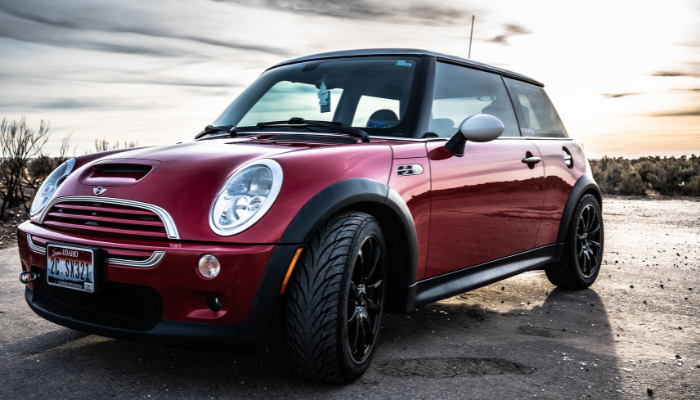
- Best city car and supermini: MINI Cooper E, which did well in structural crash testing despite its size.
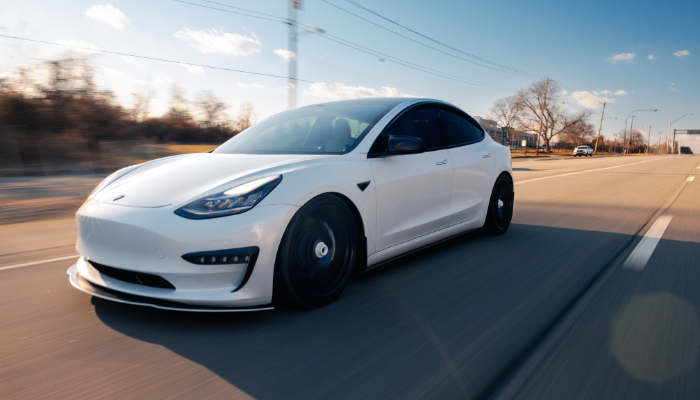
- Best large family car: Tesla Model 3, strong across the board and particularly good on child occupant protection.
- Best small SUV: Tesla Model Y, excelling on child occupant protection and driver assistance.
- Best large SUV: Smart #5, a first big SUV for the brand that lost nothing in occupant protection.
- Best executive car: Polestar 3, praised for structural integrity and child occupant protection.
One pattern is hard to miss here: all six class winners were electric. Euro NCAP's own programme director has said EVs are now often outperforming petrol and diesel cars on safety. If your budget is nearer the used market rather than a brand new EV, our round-up of the best used cars under £20k is a more useful starting point.
Safest family cars and SUVs
If you're buying for a family, the child occupant score deserves just as much attention as the headline stars. It's measured separately, using 6 and 10 year old dummies plus an assessment of how easily child seats install, so a car can protect adults brilliantly and still score noticeably lower for children.
The 2025 results are encouraging on this front. The Tesla Model 3 and Model Y both stood out for child occupant protection, and the Polestar 3 was singled out for the same thing in the executive class. The smart #5 showed that a large SUV from a small-car brand can still protect its occupants properly.
Safest small cars and superminis
Small cars used to be where safety got compromised. That's much less true now. The MINI Cooper E took the 2025 city car and supermini class win on the strength of its structural crash performance, in a body that still fits comfortably into a terraced street parking space.
There is still a physics caveat worth stating plainly, though. In a collision between two cars, mass matters. A five star supermini and a five star large SUV have both cleared the same bar for their own class, but they're not equally protected if they hit each other. That's not an argument against small cars; it's part of why Euro NCAP compares within a class rather than across the whole market.
What actually makes a car safe?
Euro NCAP hasn't tested every car on the road, and even where it has, the exact version on the forecourt might not match the version it originally assessed. So it helps to know what you're actually looking at.
Safety splits into two halves:
Passive safety is everything that protects you once a crash is already happening:
- The body structure and crumple zones
- Front, side and curtain airbags
- Seatbelts and load limiters
- Properly designed head restraints
- ISOFIX points for child seats
Active safety is everything that tries to stop the crash happening at all:
- Autonomous emergency breaking
- Lane keeping
- Blind spot monitoring
- Drowsiness and distraction detection
- Intelligent speed assistance
- Tyre pressure monitoring
We have written more about how car technology is saving lives if you want the detail.
How to choose the safest used car
1. Start on the Euro NCAP website:
Look up the exact model and the exact year. Not just the model line, the year. A car that scored five stars when the current generation launched may have been assessed several protocol revisions ago, and that matters more than the star count on its own.
2. Then work out what was actually fitted:
Autonomous emergency braking, lane keeping and blind spot monitoring were optional extras on plenty of cars still circulating in the used market, and they were often bundled into pricier packs. Two identical-looking examples of the same car, same year, can have very different safety kit sitting underneath.
3. Don't write off an older car with a full service history in fabour of a newer one with nothing
A well-maintained car whose brakes, tyres and systems all work properly is a safer bet than a fresher one that's been neglected. Our used car buying checklist covers the wider inspection if you want the full rundown.
Next steps
Choosing a safe car is the first decision. The second is what happens when the systems that make it safe stop working.
Modern safety kit is complex, and repairs to it are rarely cheap. What a car Warranty covers varies a lot between providers. If you're close to buying, it's worth comparing what a MotorEasy car warranty actually includes before you need it. And if you're buying used, a car history check will tell you about recalls and write-offs before you hand over any money.
Safest cars FAQS
Which is the safest car brand?
Euro NCAP rates individual models, not manufacturers, so there's no official "safest brand." Volvo built its reputation on this for decades, but the 2025 Best in Class winners were spread across Mercedes-Benz, MINI, Tesla, smart and Polestar. Our advice: look up the specific model and year you're considering rather than trusting the badge alone.
Are chinese brands safe?
Several are, on Euro NCAP's own evidence. Announcing its 2025 winners, Euro NCAP pointed to new entrants including Leapmotor and firefly as a sign of growing global competition on safety. As with any car, judge the specific model and its test year on the Euro NCAP site rather than the country it was built in.
What is the safest car for a new driver?
The highest-scoring cars are often large, expensive and sit in high insurance groups, which rules them out for most new drivers straight away. A small car with a recent five star rating and standard autonomous emergency braking is usually the sensible answer. Insurance group is a separate question from crash safety though, so it's worth checking both before you commit.
Do safety features reduce your car insurance?
They can. Systems such as autonomous emergency braking reduce how often claims happen, which insurers do take into account. They also make repairs more expensive, though, which pushes in the other direction and can raise a car's insurance group. The only reliable way to know for sure is to get a quote on the specific model and trim you're looking at.